What is the Difference Between Market Value and Replacement Cost?
Many homeowners assume the amount their home is worth is the amount it should be insured for. In reality, market value and replacement cost measure two completely different things.
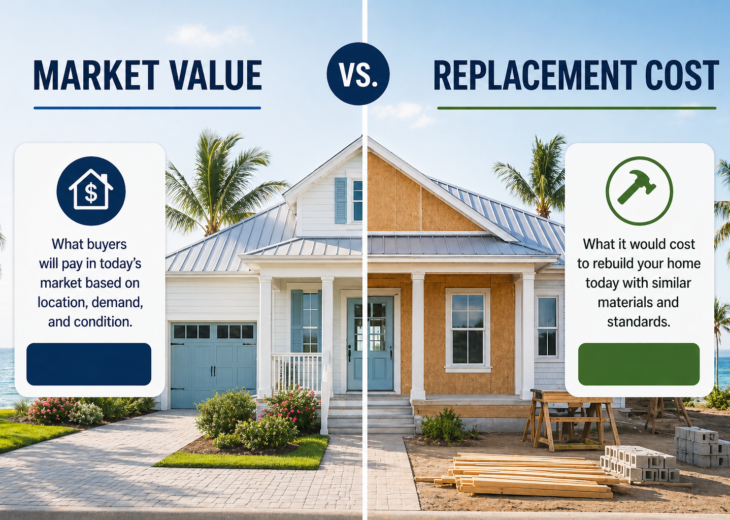
Market value is what someone is willing to pay for your home. Replacement cost is what it would cost to rebuild your home using similar materials and construction methods after a covered loss. The National Association of Insurance Commissioners (NAIC) also explains the importance of understanding how replacement cost and actual cash value affect what your policy may pay after a covered loss.
Understanding the difference can help you avoid being underinsured and better prepare for the cost of rebuilding after a covered loss.
For example, two nearly identical homes in different Florida cities may have very different market values because of location, school districts, or buyer demand. Yet the cost to rebuild those homes could be very similar because construction materials, labor, and building requirements may be similar.
Why Doesn’t Home Insurance Use Market Value?
Homeowners insurance is designed to pay for rebuilding your home—not buying it again.
Your home’s market value includes factors that have nothing to do with reconstruction, including:
- Location
- Neighborhood desirability
- School districts
- Nearby amenities
- Local housing demand
- Land value
None of those factors determine what it costs to rebuild after a fire, hurricane, or other covered loss.
Instead, insurers estimate your home’s replacement cost, which reflects the cost of rebuilding the structure with materials of like kind and quality, subject to your policy’s terms and conditions.
What Affects Replacement Cost?
Replacement cost is based on current construction expenses—not the real estate market.
Several factors influence what it costs to rebuild a home, including:
- Building materials: Lumber, roofing, concrete, windows, and specialty products can fluctuate in price.
- Labor costs: Skilled contractors may be harder to find after major storms or during periods of high construction demand, increasing rebuilding costs.
- Building codes: Homes damaged during a covered loss may need repairs or rebuilding that comply with current local building codes. Depending on your policy, additional ordinance or law coverage may help pay for certain required upgrades. The Federal Emergency Management Agency (FEMA) also notes that building codes are updated regularly to improve safety and resilience, which can affect rebuilding requirements after a disaster.
- Home features: Square footage, custom finishes, cabinetry, flooring, roof type, roof age, and other construction details all influence rebuilding costs.
Even homes that look identical from the street can have different replacement costs because of differences in construction quality, upgrades, or interior finishes.
Quick Summary
- Market value = what your home could sell for.
- Replacement cost = what it would cost to rebuild your home after a covered loss.
Those numbers are often different—and that’s completely normal.
How Is Personal Property Covered?
Your home isn’t the only thing covered by your homeowners policy. Your personal belongings may also be covered, but the valuation depends on your policy.
Many policies provide one of two valuation methods:
- Actual Cash Value (ACV): Pays the item’s value at the time of the loss after depreciation is applied.
- Replacement Cost (RC): Pays the amount needed to replace the item with a new one of a similar kind and quality, subject to your policy limits and terms.
Learn more about the difference between actual cash value and replacement cost coverage from the National Association of Insurance Commissioners. (NAIC)
Common Misconceptions About Coverage
Many homeowners are surprised to learn that:
- Their home’s market value is not the same as the amount needed to rebuild it.
- Personal belongings may be covered differently than the home itself.
- Remodeling projects, additions, and major upgrades can increase rebuilding costs.
- Construction costs can change over time because of inflation, labor shortages, or increased demand following widespread disasters.
Understanding these differences can help you make more informed decisions about your coverage.
How Security First Helps Estimate Replacement Cost
When you purchase a homeowners policy with Security First, we estimate your home’s replacement cost using industry-standard replacement cost valuation tools and property-specific characteristics. We also review replacement cost at renewal to account for changes in construction costs over time.
Keeping your coverage up to date is a shared responsibility. If you’ve completed major renovations, added square footage, upgraded kitchens or bathrooms, or made other significant improvements, let your agent or insurance company know so your coverage can be reviewed.
How to Help Keep Your Coverage Up to Date
To reduce the chance of being underinsured:
- Review your policy each year. Construction costs can change over time, even if your home’s market value does not. The Insurance Information Institute (III) also recommends reviewing your homeowners policy regularly to help ensure your coverage keeps pace with changes to your home and rebuilding costs.
- Tell your insurer about major improvements. Renovations and additions may increase the cost to rebuild.
- Understand your coverage. Know whether your home and personal belongings are covered at replacement cost or actual cash value.
- Ask questions. If you’re unsure how your coverage works, talk with your insurance professional before you need to file a claim.
The Bottom Line
Market value tells you what your home may sell for. Replacement cost estimates what it would take to rebuild it after a covered loss.
Those numbers often aren’t the same, and understanding the difference can help you choose coverage that’s better aligned with the cost to rebuild your home—not its real estate value.
Take Action Today
If it’s been a while since you’ve reviewed your homeowners insurance, now is a good time to make sure your coverage still reflects your home’s rebuilding cost.
Contact your insurance agent to review your policy. If you’re a Security First customer, call our Customer Support team at 877-333-9992 for assistance.
Updated: July 20, 2026
Frequently Asked Questions
Market Value and Replacement Cost
No. Homeowners insurance is generally based on your home’s estimated replacement cost, not its market value. The goal is to help pay to repair or rebuild your home after a covered loss—not reimburse what it could sell for on the real estate market.
In some cases, rebuilding a home can cost more than buying a similar home. Construction materials, labor, permitting, and current building codes all affect replacement cost, while market value is influenced by location, land value, and buyer demand. As a result, your coverage amount may be higher—or lower—than your home’s market value.
Yes. Replacement cost estimates can change over time as the price of construction materials, labor, and building code requirements change. That’s one reason it’s important to review your homeowners insurance annually and let your insurer know about major renovations or improvements.
No. An appraisal estimates a home’s market value for buying, selling, or financing purposes. Replacement cost estimates what it would cost to rebuild the home after a covered loss. Because they measure different things, the two values are often different.

 Spread The Word