Florida Sinkholes: What Homeowners Need to Know
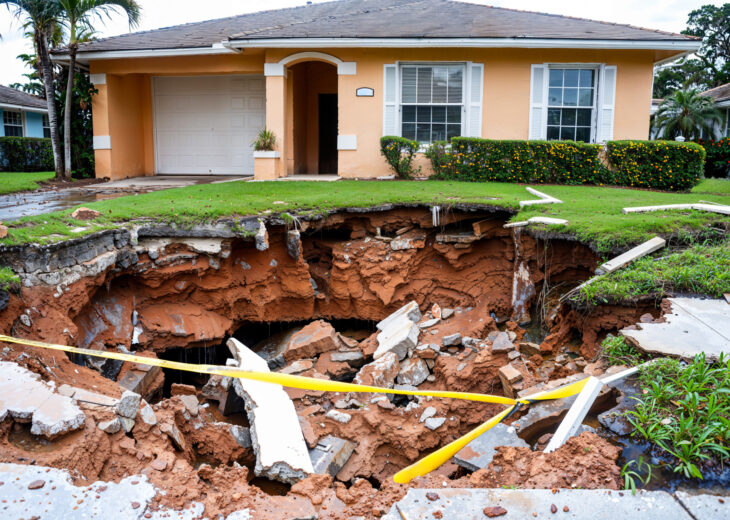

Sinkholes in Florida can make the ground beneath your feet shift—sometimes literally. But not every dip, crack, or collapse in your yard is a sinkhole, and understanding the difference matters when it comes to your homeowners insurance. In this guide, we’ll break down what sinkholes are, how they differ from other ground collapses, and what you can do to protect your home.
A sinkhole forms when Florida’s limestone bedrock dissolves over time due to water erosion, creating underground voids that can suddenly collapse and pull the surface down. Florida’s karst terrain makes the state highly susceptible to sinkholes.
These events can be expensive. According to the Insurance Information Institute, the average Florida sinkhole claim in 2020 exceeded $140,000. Hundreds of claims are still filed each year.
It’s important to know the differences:
Understanding these distinctions helps you know what your policy covers.
Most standard homeowners policies exclude sinkhole damage under “earth movement.” In Florida, however, insurers are required to offer optional sinkhole coverage. CGCC coverage is automatically included but only applies to extreme cases.
At Security First Insurance, all homeowners policies include CGCC. Optional Sinkhole coverage is available on most policy types (except renters/HO4). To see if you qualify, schedule a sinkhole inspection with SDII, a third-party inspection company. The current inspection fee is $200, and you’d be responsible for paying 50% of the cost. Eligibility is determined by inspection results, not zip code.
Sinkholes don’t always appear overnight. Watch for:
If you notice any of these, call a structural engineer or geologist immediately. Acting early can save significant repair costs.
Here’s what you can do today:
For more information, visit the Florida Department of Environmental Protection’s Sinkhole FAQ page.
Have questions about your current coverage or want to explore your options? Call us at 877-333-9992 or contact your insurance agent. If you’re looking for a homeowners policy that includes CGCC coverage with optional sinkhole protection, we’re here to help. Get a free quote today.
 Homeowners Insurance Florida
Discover why Florida homeowners choose Security First for hurricane season. Get peace of mind, stability, and local expertise from a Florida-focused insurer.
 Home Safety
 Home Safety
Lighting and Thunderstorm safety: A Florida Homeowner’s Guide to Preparing, Staying Safe, and Recovering After a Storm
The content provided on this page is for informational purposes only and should not be construed as legal or professional advice of any kind. Any views, opinions, and statements expressed in this content are solely those of the individual author or contributor and do not necessarily reflect the official views, opinions, or positions of Security First Insurance Company. We make no representations, warranties, or guarantees, whether express or implied, regarding the accuracy, completeness, reliability, suitability, or availability of this content. Furthermore, we do not endorse, approve or guarantee any embedded third party links or other materials. Any reliance you place on such content, links or materials is strictly at your own risk. Please see Section 7 of our Terms of Use for more information. Any copying, reproduction, or other distribution of the contents of this page is strictly prohibited.
 Spread The Word